
Your Browsing History
BEST SELLERS


BEST SELLERS
In External SSDs
Our most popular products, based on sales and updated frequently.Shop Department
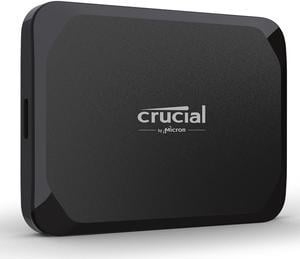
Crucial X9 1TB Portable SSD - Up to 1050MB/s Read - PC and Mac, Lightweight and small - USB 3.2 External Solid State Drive - CT1000X9SSD9
- Color: Black
- Max Sequential Read: Up to 1050 MBps
- Model #: CT1000X9SSD9
- Item #: N82E16820156384
- Return Policy: Standard Return Policy
$179.99
Free Shipping
The Crucial X9 is surprisingly small, measuring 0.3 by 2.6 by 2 inches (HWD) and weighing a mere 1.5 ounces. The X9 features a minimalist black plastic case adorned with the Crucial logo. It offers good value for money, especially considering its large 2TB capacity (and it also comes in a 4TB variant). Additionally, its 256-bit AES hardware-based encryption adds an extra layer of security. The X9 includes a USB-C port, and a cable with USB-C connectors at both ends is included. fast at 1.35 Gb/s
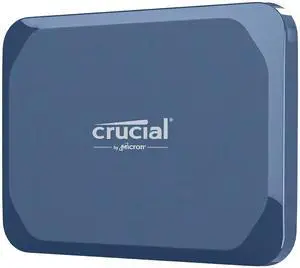
Crucial X10 2TB Portable Solid State Drive - External - USB 3.2 Gen 2x2 CT2000X10SSD9
- Brand: Crucial
- Series: X10
- Capacity: 2TB
- Interface: USB 3.2 Gen 2x2
- Model #: CT2000X10SSD9
- Item #: N82E16820156439
- Return Policy: Standard Return Policy
$349.99
Free Shipping
- 3 Year Warranty with registering - Perfect for storing (off loading) PS5 games - Acronis True Image For Crucial - Software included - 1 month of Adobe® Acrobat Pro upon registering the Crucial X10 (if desired) - IP65 certified water/dust resistant - Drop resistant to 3 meters
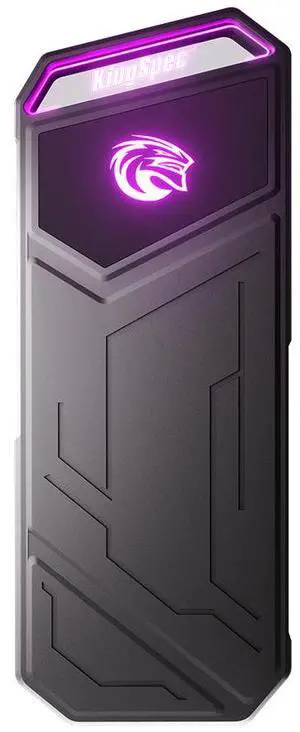
KingSpec Z5 Portable SSD With RGB 2TB - Up to 2100 MB/s - USB 3.2 Gen 2 - Type-c, 20Gbps, External Solid State Drive, for Photographers, Content Creators and Gaming, Black
- Brand: KingSpec
- Series: Z5 Series
- Model: Z5-2TB
- Part Number: Z5-2TB
- Model #: Z5-2TB
- Item #: 9SIB1V9K5U7811
- Return Policy: View Return Policy
$227.99
$234.99
Free Shipping
As title says. Great product. Runs very well and at high speed. Now, make sure you have a Type-C port and also make sure your Motherboard supports USB 3.2 Gen 2x2 in order to gain from the 2000 MB/S. If it only supports USB 3.2 Gen 2 or below then it will run at a max speed of 1000 MB/S which is pretty fast, still. It also doesn't specify if it comes with a cable. Yes, a Type-C cable. Not a USB cable. So like I said you need a Type-C port.
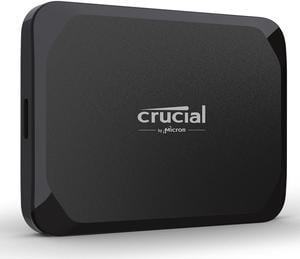
Crucial X9 2TB Portable SSD - Up to 1050MB/s Read - PC and Mac, Lightweight and small - USB 3.2 External Solid State Drive - CT2000X9SSD9
- Part Number: CT2000X9SSD9
- Color: Black
- Max Sequential Read: Up to 1050 MBps
- Model #: CT2000X9SSD9
- Item #: 9SIADGEK7J7967
- Return Policy: View Return Policy
$489.99
Free Shipping
Plenty fast enough for my purposes. Getting close to the theoretical maximum read/write speeds of 1050Gbps using a certified 40Gbps data cable on an M2 MacBook Air.
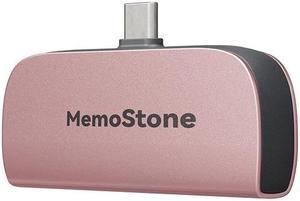
KingSpec MomeStone 1TB Portable SSD up to 2000MB/s, Thumb Drive 20Gbps USB 3.2 Gen 2, Type-C USSD Mobile Solid U Disk USB Flash External Solid State Drive Compatible with iPhone 15 Pro/15 Pro Max
- Color: Pink
- Model #: US5-1TB-Pink
- Item #: 9SIB1V9KD24270
- Return Policy: View Return Policy
SOLD OUT
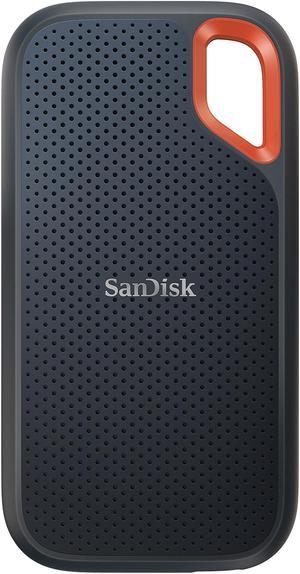
SanDisk 2TB Extreme Portable SSD - Up to 1050MB/s, USB-C, USB 3.2 Gen 2, IP65 Water and Dust Resistance, Updated Firmware - External Solid State Drive - SDSSDE61-2T00-G25
- Color: Black
- Max Sequential Read: Up to 1050 MBps
- Max Sequential Write: Up to 1000 MBps
- Width: 100.8mm
- Model #: SDSSDE61-2T00-G25
- Item #: N82E16820173504
- Return Policy: Standard Return Policy
$499.99
$549.99
Free Shipping
Good transfer rate, great protective casing, easily portable. Excellent value for the money!
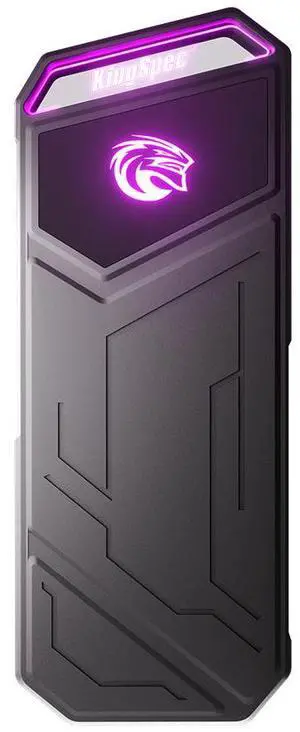
KingSpec Z5 Portable SSD With RGB 512GB - Up to 2100 MB/s - USB 3.2 Gen 2 - Type-c, 20Gbps, External Solid State Drive, for Photographers, Content Creators and Gaming, Black
- Brand: KingSpec
- Series: Memostone
- Capacity: 512GB
- Memory Components: 3D TLC
- Model #: Z5-512
- Item #: 9SIB1V9K5U7815
- Return Policy: View Return Policy
$89.99
$95.99
Free Shipping
USB C enough said. This is the fastest External Drive I own.
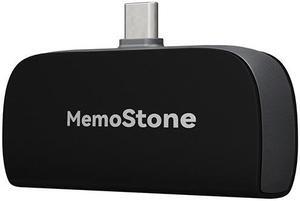
KingSpec MomeStone 1TB Portable SSD up to 2000MB/s, Thumb Drive 20Gbps USB 3.2 Gen 2, Type-C USSD Mobile Solid U Disk USB Flash External Solid State Drive Compatible with iPhone 15 Pro/15 Pro Max
- Color: Black
- Model #: US5-1TB-Black
- Item #: 9SIB1V9KD24264
- Return Policy: View Return Policy
$84.99
Free Shipping
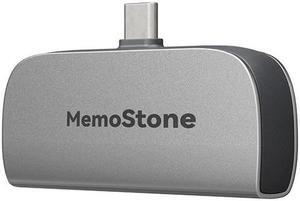
KingSpec MomeStone 2TB Portable SSD up to 2000MB/s, Thumb Drive 20Gbps USB 3.2 Gen 2, Type-C USSD Mobile Solid U Disk USB Flash External Solid State Drive Compatible with iPhone 15 Pro/15 Pro Max
- Color: Silver
- Model #: US5-2TB-Silver
- Item #: 9SIB1V9KD24265
- Return Policy: View Return Policy
$172.99
$183.99
Free Shipping
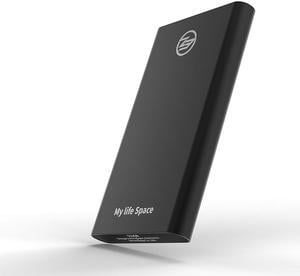
KingSpec External SSD 960GB Internal Solid State Drive Portable SSD Hard Drive Type-C to USB 3.1
- Color: Black
- Max Sequential Write: Up to 500 MBps
- Width: 1.64
- Depth: 3.1
- Model #: External SSD 960GB
- Item #: 9SIB1V9FSF1517
- Return Policy: View Return Policy
$89.99
Free Shipping
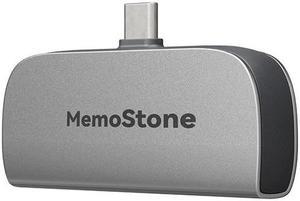
KingSpec MomeStone 512GB Portable SSD up to 2000MB/s Read, Thumb Drive Metal USB 3.2 Type C USSD Mobile Solid U Disk External USB Flash Drives Data Storage Compatible with Phone/Laptop/Computer Silver
- Color: Silver
- Model #: US5-512-Silver
- Item #: 9SIB1V9KD24269
- Return Policy: View Return Policy
$51.99
$56.99
Free Shipping

SAMSUNG T7 Portable SSD 1TB - Up to 1050 MB/s - USB 3.2 Gen 2 External Solid State Drive, Blue (MU-PC1T0H/AM)
- Color: Blue
- Max Sequential Read: Up to 1050 MBps
- Max Sequential Write: Up to 1000 MBps
- Width: 2.20"
- Model #: MU-PC1T0H/AM
- Item #: N82E16820147764
- Return Policy: Standard Return Policy
$374.97
$9.99 Shipping
Download as expected and good looking device!
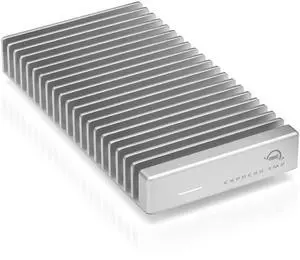
OWC Express 1M2 Portable NVMe SSD USB4 (Thunderbolt compatible / USB-C) Ultra Fast External SSD Drive with Aluminum Heat Sink Enclosure (Enclosure Only)
- Brand: OWC
- Form Factor: M.2 2280
- Capacity: N/A
- Interface: USB4
- Model #: OWCUS4EXP1M2
- Item #: 9SIC4R4KRX2873
- Return Policy: View Return Policy
$173.99
$12.00 Shipping
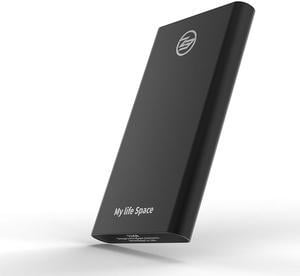
KingSpec External SSD 480GB Internal Solid State Drive Portable SSD Hard Drive Type-C to USB 3.1
- Color: Black
- Max Sequential Write: Up to 500 MBps
- Width: 1.64
- Depth: 3.1
- Model #: External SSD 480GB
- Item #: 9SIB1V9FSF1513
- Return Policy: View Return Policy
$56.99
Free Shipping
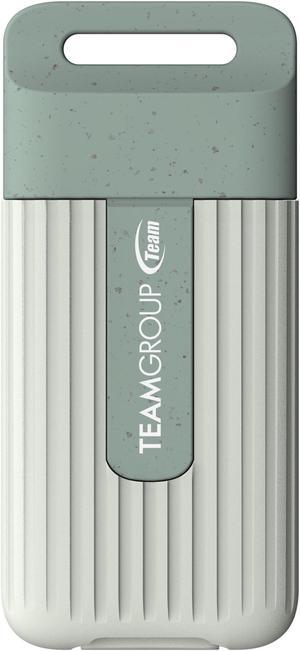
Team Group PD20 ECO 2TB USB type-C mini external SSD, speed Up to 1,000 MB/s (TPSEG4002T0C102)
- Max Sequential Read: Up to 1000 MBps
- Operating Temperature: 0°C ~ +70°C
- Storage Temperature: -40°C ~ +80°C
- Weight: 22g
- Model #: TPSEG4002T0C102
- Item #: N82E16820985216
- Return Policy: Standard Return Policy
$319.99
$29.99 Shipping
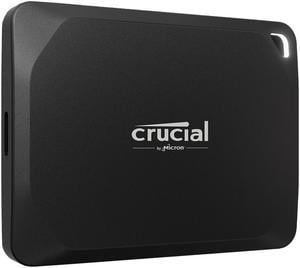
Crucial X10 Pro 1TB Portable SSD - Up to 2100MB/s read, 2000MB/s write - water and dust resistant, PC and Mac - USB 3.2 External Solid State Drive - CT1000X10PROSSD9
- Color: Black
- Max Sequential Read: Up to 2100 MBps
- Max Sequential Write: Up to 2000 MBps
- Model #: CT1000X10PROSSD9
- Item #: 9SIA7BBK832224
- Return Policy: View Return Policy
$383.68
Free Shipping
I use the drive for running the Raspberry PI4 and it is faster than the micro chip. Pretty much plug and play and easy to load the OS from my main system.
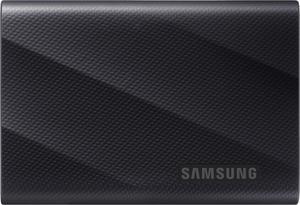
SAMSUNG T9 Portable SSD 4TB, USB 3.2 Gen 2x2 External Solid State Drive, Seq. Read Speeds Up to 2,000MB/s for Gaming, Students and Professionals,MU-PG4T0B/AM, Black
- Max Sequential Read: Up to 2000 MBps
- Max Sequential Write: Up to 2000 MBps
- Max Shock Resistance: 1,500G, duration: 0.5ms, 3 axis (Non-Operating)
- Max Vibration Resistance: 20~2,000Hz, 20G (Non-Operating)
- Model #: MU-PG4T0B/AM
- Item #: 9SIB4UBKFZ5054
- Return Policy: View Return Policy
$1,559.97
Free Shipping
Plug n play. Backup took 15 min when my old drive took 5 hrs.
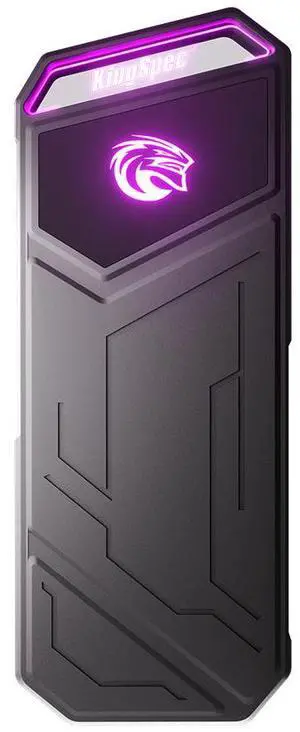
KingSpec Z5 Portable SSD With RGB 4TB - Up to 2100 MB/s - USB 3.2 Gen 2 - Type-c, 20Gbps, External Solid State Drive, for Photographers, Content Creators and Gaming, Black
- Brand: KingSpec
- Series: Z5 Series
- Model: Z5-4TB
- Part Number: Z5-4TB
- Model #: Z5-4TB
- Item #: 9SIB1V9K9E3013
- Return Policy: View Return Policy
$446.99
$699.99
Free Shipping
Price Speed
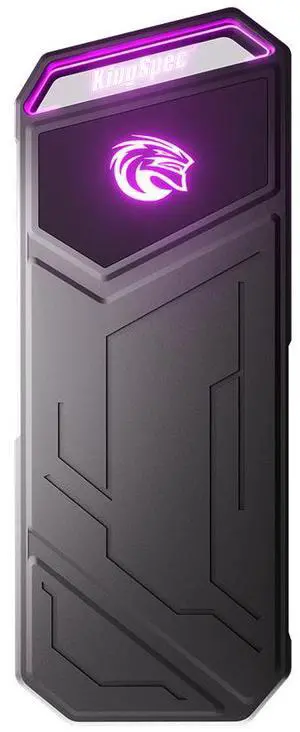
KingSpec Z5 Portable SSD With RGB 1TB - Up to 2100 MB/s - USB 3.2 Gen 2 - Type-c, 20Gbps, External Solid State Drive, for Photographers, Content Creators and Gaming, Black
- Brand: KingSpec
- Series: Memostone
- Capacity: 1TB
- Memory Components: 3D TLC
- Model #: Z5-1TB
- Item #: 9SIB1V9K5U7814
- Return Policy: View Return Policy
$160.99
$175.99
Free Shipping
Beautiful design. Big storage space. FAST. Reliable. Easy.
Crucial X10 8TB USB 3.2 Gen 2x2 SSD
- Brand: Crucial
- Series: X10
- Capacity: 8TB
- Interface: USB 3.2 Gen 2x2
- Model #: CT8000X10SSD9
- Item #: N82E16820156442
- Return Policy: Standard Return Policy
$1,199.99
Free Shipping
Arrived formatted exFat, GPT from Crucial. A few preinstalled offers included links to, Acronis backup software, Mylio Photo Organizer and the Crucial support webpage. The first thing I did was use software to repartition the drive then format to NTFS. I will mention after running synthetic benchmarks formatted NTFS then reformatted back to exFat produced little difference in benchmarks speed-wise. I used Crystal DiskMark9 to check speed. I have a Thunderbolt PCIE card installed and anticipated a jump in Read/Write speeds when using the Thunderbolt option. To my surprise, there was little difference in speed from the USB-C than when tested while connected to the Thunderbolt adapter. When connected with USB-C Read/Write bench speeds of 1041/1005 MB/s were reached. Testing speed connected to the PCIE Thunderbolt adapted showed R/W 1043/1023 MB/s. The synthetic speed tests were well below the advertised 2100 MB/s. I wasnt disappointed with the speeds, but I did expect my tests to be closer to the advertised speeds. And Im not sure why my unit didnt test closer to the 2100 MB/s. The advertised speeds could have been reached using a different software, not sure why my results showed lower R/W speeds. I happened to have a portable 1GB hard drive from around the 2004 era. The speeds hardly compare to the Crucial X10, but its amusing to see the difference in the size of the units (see picture). This Crucial X10 is nothing short of extraordinarily fast for a portable USB drive. I will definitely be using this drive next time I copy my music and music video files. Large enough to copy my main PCs entire storage drive. The cutting-edge speeds will be a real time-saver.